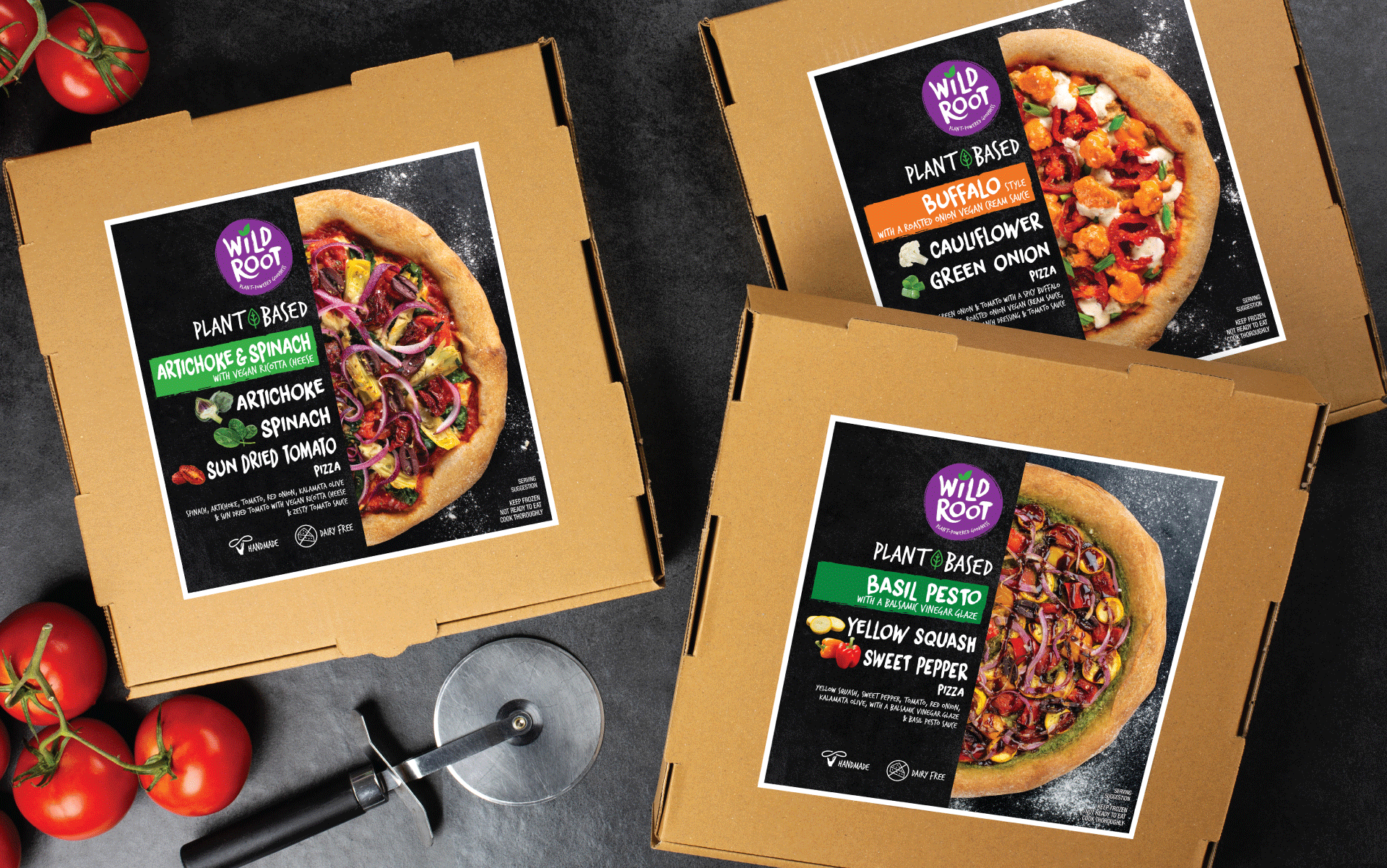
Wild Root Foods
Building a plant-forward frozen pizza brand from strategy to shelf.
Wild Root Foods began as an opportunity to rethink plant-based frozen pizza. I developed the brand from the ground up — defining the market opportunity, positioning strategy, nomenclature, visual identity, packaging system, product recipes, and go-to-market plan.
From concept through launch at local farmers markets and direct-to-consumer channels, the goal was to create a premium, vegetable-forward pizza brand built on real ingredients rather than imitation substitutes.
The project required balancing consumer insight, brand architecture, product development, creative execution, and operational realities, and unit economics — providing hands-on experience in managing a brand from ideation through launch.
• Defined market opportunity & positioning
• Developed nomenclature & identity system
• Designed scalable packaging architecture
• Created product recipes & sourcing direction
• Launched through farmers markets & DTC
The Opportunity
Identifying the Market Gap

The plant-based frozen pizza category was crowded with products focused on imitation — fake mozzarella cheeses, fake meats, and heavy processing. The opportunity was to create a vegetable-forward brand that celebrated real ingredients and handcrafted quality.
The goal: differentiate through authenticity, abundance, and premium presentation.

Target Consumer
Targeting the Ingredient-Conscious Flexitarian
Wild Root was built for the ingredient-conscious flexitarian — someone who actively seeks better-for-you options but refuses to compromise on flavor or indulgence.
They read ingredient labels, prefer recognizable foods over processed substitutes, and are drawn to brands that feel authentic and thoughtfully made. While they may not identify as strictly vegan or vegetarian, they intentionally incorporate more plant-forward meals into their routine.
They are willing to pay a premium for quality, transparency, and bold flavor — especially when the product feels crafted rather than manufactured.
• Reads labels
• Values authenticity
• Pays for premium quality
This consumer represents a fast-growing segment within premium frozen and better-for-you categories.
Brand Foundation
Brand Personality & Archetype
Wild Root was positioned at the intersection of the Explorer and Lover archetypes — combining bold culinary discovery with indulgent satisfaction.
The Explorer shows up through unconventional flavor combinations, vegetable-forward abundance, and a willingness to challenge category norms dominated by imitation ingredients.
The Lover brings warmth, richness, and craftsmanship — emphasizing abundance, care, and a deeply satisfying eating experience.
Together, this dual archetype ensures the brand feels adventurous yet comforting, premium yet approachable — guiding tone of voice, visual identity, and innovation decisions.

Brand Foundation
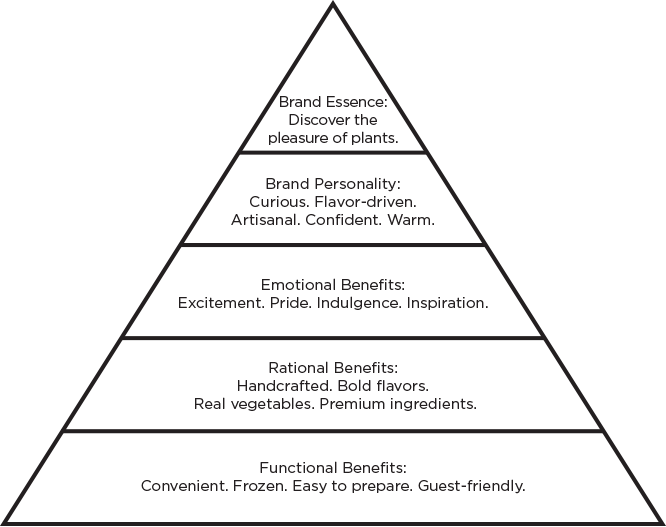
Brand Mission
At Wild Root Foods, our mission is to inspire a love for plant-based eating by crafting bold, adventurous foods that celebrate the flavor and beauty of real vegetables.
Crafting the Brand Identity
Defining the Brand Name
The name Wild Root was developed to capture both exploration and grounding.
“Wild” reflects the brand’s ambition to push beyond imitation-heavy plant-based pizza and explore bold, vegetable-forward flavor combinations. Rather than relying on artificial cheeses or meat substitutes, the brand celebrates adventurous seasoning, layered cooking techniques, and elevated produce.
“Root” anchors the brand in authenticity — real vegetables, recognizable ingredients, and transparency. Together, the name balances creativity with integrity, signaling both excitement and trust.
The result is a name that feels distinctive, memorable, and aligned with the brand’s mission.
Visual Identity System
The identity system was designed to reinforce handcrafted quality and emotional warmth.
Handwritten typography communicates care, intention, and small-batch craftsmanship — differentiating the brand from mass-manufactured frozen competitors.
The circular logo mark, inspired by a brush-painted seal, conveys a sense of artistry and human touch. Its organic form reinforces the brand’s natural foundation while creating a recognizable stamp across packaging and digital applications.
The primary purple color palette was selected to balance passion and warmth with depth and sophistication. Purple hints at the emotional pull of the Lover archetype while avoiding the aggressiveness of bright red commonly used in the pizza category. A subtle green leaf accent reinforces plant-forward authenticity without becoming overtly “health coded.”
Packaging System
Designing for Shelf Impact & Scalability
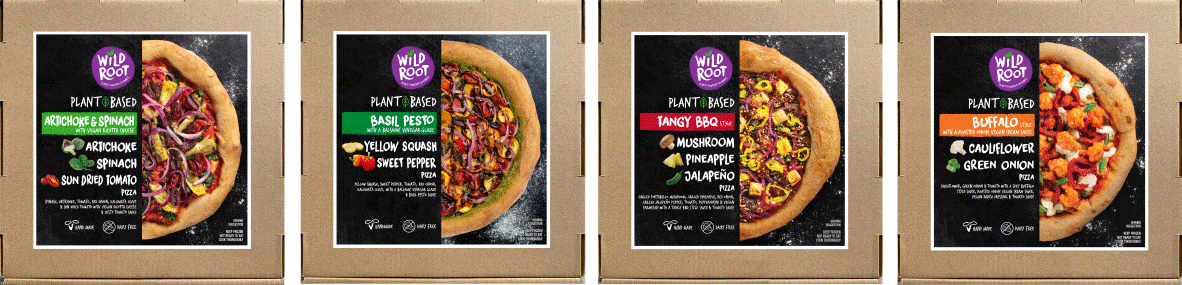
The packaging system elevated frozen pizza beyond commodity cues and reinforced Wild Root’s handcrafted, premium positioning.
Handwritten typography carries forward the small-batch craftsmanship established in the identity system, creating continuity from logo to front-of-pack communication.
A predominantly black background was introduced to frame the vibrant food photography and create contrast at shelf. In a category often dominated by red and busy layouts, the darker field signals sophistication while allowing the colorful vegetables to visually command attention.
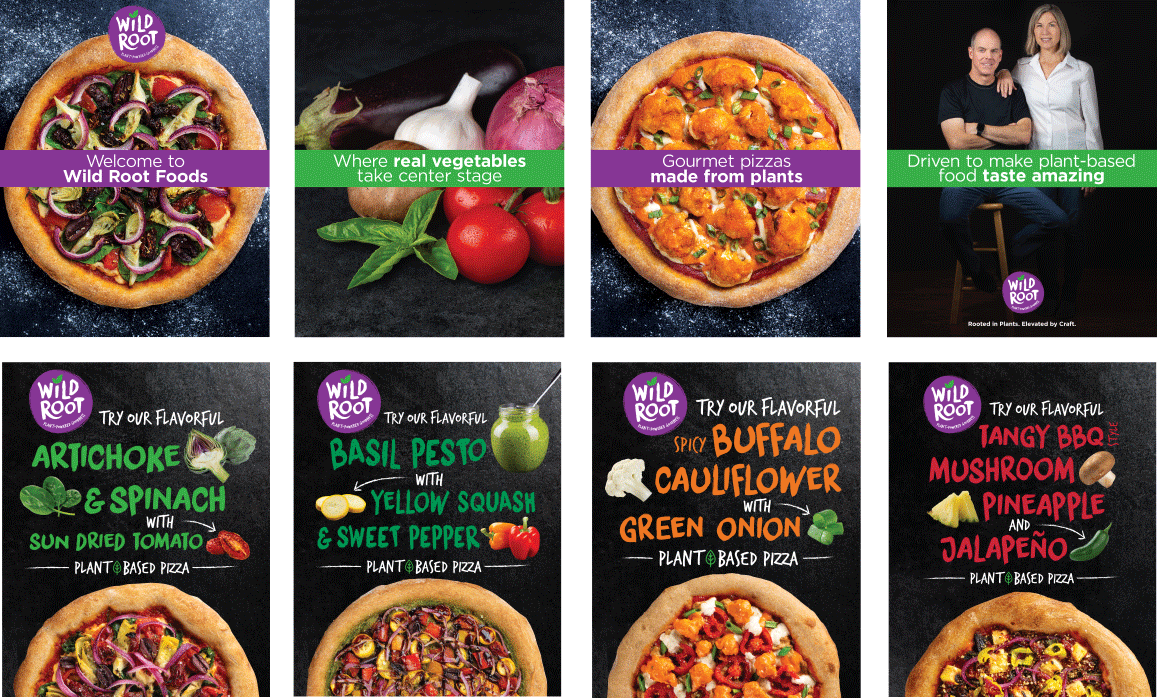
Vegetable-forward messaging is central to the system. The three hero ingredients for each flavor are highlighted in large type with supporting inset photography, reinforcing abundance and transparency. Prominent overhead pizza photography showcases layered toppings and seasoning detail — visually proving that plant-based can be indulgent.
A flexible, organically shaped color bar distinguishes each flavor while maintaining cohesion across the line. This allows for future SKU expansion without disrupting brand architecture.
The Plant-Based callout sits prominently beneath the Wild Root mark, clearly signaling the brand’s positioning while remaining secondary to flavor and visual appetite appeal.
Structurally, the pizzas are housed in restaurant-style cardboard boxes rather than traditional printed frozen cartons. This decision elevates the unboxing experience and reinforces the perception of a crafted, specialty product rather than a mass-produced frozen item.
System Scalability & Future Growth
The Wild Root packaging system was built with expansion in mind. Its core architecture — bold photography, dark premium field, handwritten typography, and ingredient-forward callouts — was designed to flex across new categories while maintaining strong brand cohesion.
This framework could extend into adjacent plant-based products such as bowls, or sauces, allowing for efficient innovation while strengthening shelf presence and brand blocking. Each new SKU would reinforce the brand’s central promise: vegetable-forward, handcrafted, premium convenience.
Product Development
Beyond Design: Product Creation & Execution
Wild Root was never just a branding exercise — it required building a product that could deliver on the promise. Without relying on dairy or meat to carry flavor, we approached recipe development with a culinary mindset.
Rather than simply layering raw vegetables onto a crust, each ingredient was intentionally seasoned, marinated, or roasted to maximize depth and complexity. Sauce and vegetable combinations were crafted to feel indulgent and differentiated within the frozen pizza category.
Each flavor was tested with consumers and refined with feedback from a professional chef to ensure both taste appeal and balance.
Ingredient sourcing required ongoing optimization. We balanced quality, cost, and label integrity — often reformulating or producing components in-house to avoid unwanted additives while maintaining premium standards. Every decision required balancing taste, cost, label integrity, and scalability.
The crust itself became a product differentiator. A two-day fermentation and parbake process developed flavor and texture more akin to restaurant pizza than typical frozen offerings. Production was organized in batch cycles to maintain consistency while preparing inventory for market.
Go-To-Market & Launch
Bringing the Brand to Market
Wild Root Foods launched across four farmers markets in Lake County, Illinois as a direct-to-consumer pilot. The booth was designed to reflect the premium positioning of the brand — large flavor photography, cohesive signage, and professional merchandising elevated the presence beyond a typical market vendor. On-site sampling proved essential. Once consumers tasted the pizzas, skepticism about a “cheese-free” product quickly turned into excitement and purchase intent.
Many shoppers assumed we were already in grocery stores — a signal that the branding, packaging, and booth execution successfully communicated scale and credibility despite being a small team.

Direct-to-Consumer & E-Commerce
We developed a branded website with integrated e-commerce, offering local pickup in Gurnee and statewide shipping within Illinois. The digital experience reinforced our differentiation strategy: abundant real vegetables, bold flavor development, and no artificial substitutes.
Photography led the storytelling. Large, vibrant imagery and clear ingredient callouts positioned Wild Root as premium, handcrafted, and vegetable-forward across every touchpoint.

Social Media & Community Activation
Social media focused on education and discovery. We introduced the brand, highlighted our real-ingredient approach, and shared visually rich product content across local and plant-based community groups throughout Illinois.
Customers frequently cited social media as their first point of awareness. Organic engagement was strong, and repeat buyers often shared positive reviews publicly — helping build credibility within a niche but passionate audience.
Consumer Feedback & Market Insights
Consumer response was overwhelmingly positive:
• Sampling proved to be the most effective conversion driver
• Many claimed the pizzas tasted better than restaurant plant-based options
• Allergen-sensitive and clean-ingredient shoppers carefully read labels and appreciated transparency
• Some customers traveled to different markets to repurchase
Feedback also shaped iteration. We reformulated certain ingredients to further clean up labels, either sourcing improved inputs or producing components ourselves.
Seasonality impacted performance — peak summer markets drove strong sales, while off-season attendance declined significantly. This reinforced the need for broader retail distribution and scalable production to stabilize revenue beyond farmers market channels.
Results & Learnings
Results & Learnings
Early consumer response validated the product concept. Sampling proved critical — once consumers tasted the pizzas, reactions were overwhelmingly positive. Many commented that the flavor exceeded both frozen and restaurant plant-based alternatives, reinforcing that real vegetables and thoughtful seasoning could deliver indulgence without imitation ingredients.
Repeat purchasers and social media reviews were strongly favorable, suggesting clear product-market fit among those open to plant-forward eating.
Market & Positioning Insights
The launch validated the product concept while revealing important lessons about positioning, pricing, and channel strategy.
Positioning materially impacted conversion. While “plant-based” attracted highly aligned consumers, it also created hesitation among traditional meat and dairy shoppers. This highlighted the importance of positioning around flavor and abundance first, with plant-forward benefits as a secondary reinforcement.
The Lake County market proved smaller than anticipated for premium plant-forward frozen products, indicating stronger potential in larger metro areas or regions with higher plant-based adoption.
Pricing & Scalability Realities
The commitment to high-quality ingredients and handcrafted preparation resulted in a truly premium product — but also premium production costs. Scaling beyond farmers markets would require commercial kitchen expansion, operational staffing, and outside investment to achieve grocery-level distribution.
Broader macro trends also influenced timing. Rising food costs, shifting consumer focus toward protein-forward trends, and closures within the vegan restaurant sector suggested that launching a premium plant-forward frozen product required careful geographic and channel strategy.
Brand Execution Takeaway
Strategic branding and professional execution elevated Wild Root’s perceived scale. Packaging, booth design, and digital presence consistently prompted consumers to ask which grocery stores carried the brand — reinforcing the power of cohesive brand systems to create credibility beyond company size.
Closing Section
What This Experience Reinforced
Building Wild Root Foods from concept to launch reinforced that successful brands require more than strong design — they demand clarity in positioning, disciplined execution, financial awareness, and adaptability to market realities.
The experience strengthened my ability to think holistically across strategy, product development, branding systems, operations, and go-to-market planning. It also sharpened my understanding of how consumer perception, pricing structure, and geographic strategy all influence scalability.
Wild Root was not simply a branding project — it was full-spectrum brand management, from strategy through execution and market validation.
Key Brand Management Competencies Demonstrated
• Market opportunity identification
• Positioning strategy
• Consumer segmentation
• Product innovation
• Packaging architecture
• Go-to-market planning
• Pricing & margin awareness
• Channel strategy evaluation
• Scalability assessment